Composite Decking vs. Wood Decking: What Works Best for Southern Ontario Backyards
Outdoor decks remain one of the most popular backyard upgrades for homeowners
across Southern Ontario. A well-designed deck creates a functional outdoor living
space, improves the flow between the home and yard, and increases overall
enjoyment of the property.
When planning a new deck, one of the biggest decisions homeowners face is
choosing between composite decking and traditional wood decking. Each
material offers different advantages in terms of appearance, maintenance, durability,
and long-term performance.
Here’s what to consider before making your choice.
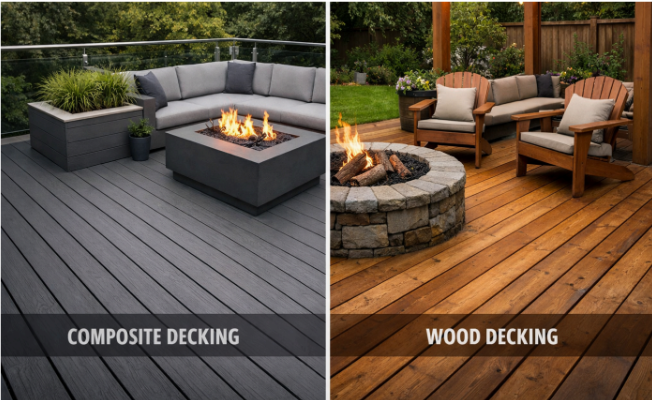
Understanding Composite Decking
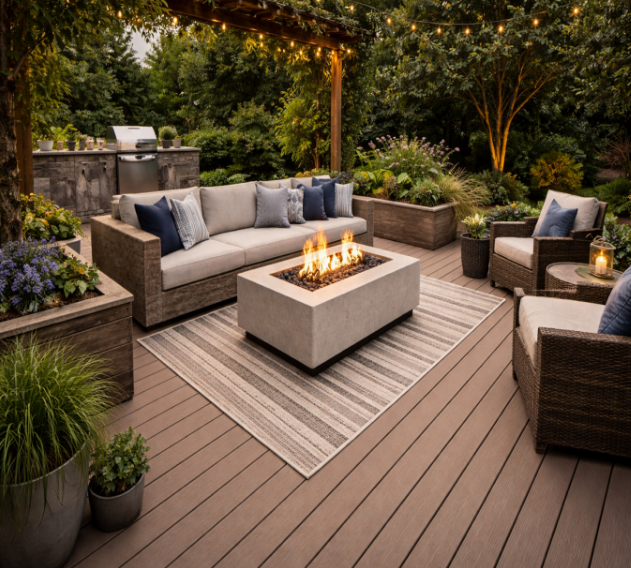
Composite decking is a manufactured product made from a blend of recycled wood fibres and plastics. It is designed to replicate the look of natural wood while offering improved resistance to moisture, fading, and general wear.
Homeowners often choose composite decking for:
● Low maintenance requirements
● Consistent colour and finish
● Resistance to rot and insect damage
● A clean, modern appearance
Many newer composite products feature realistic grain patterns and a wide range of colour options that work well in contemporary backyard designs.
Understanding Wood Decking
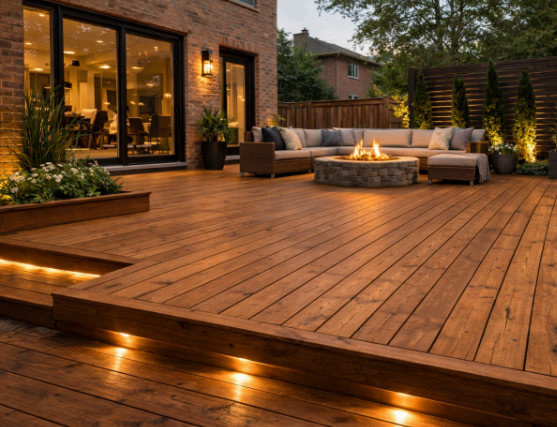
Wood decking has been used for decades and continues to offer a classic, natural outdoor aesthetic. Common decking options in Southern Ontario include pressure-treated lumber and cedar.
Wood decks are often appreciated for:
● Natural warmth and texture
● Traditional backyard appeal
● Flexibility in design
● A material that ages with character
Because wood is an organic material, it requires regular care to maintain both its appearance and performance.
Maintenance Expectations
Maintenance is one of the biggest differences between composite and wood decking.
Wood decks typically require ongoing upkeep such as cleaning, staining, sealing, and occasional board replacement. Ontario’s freeze-thaw cycles and seasonal moisture can accelerate wear if maintenance is neglected.
Composite decking generally requires less effort. Most homeowners simply wash the surface occasionally and remove debris. This makes it appealing for those who prefer a more hands-off outdoor space.
Durability in Ontario’s Climate
Southern Ontario weather can be tough on outdoor materials. Snow, moisture, and temperature swings can cause wood boards to expand, contract, or develop surface cracking over time.
Composite decking is engineered to improve durability. It is typically more resistant to rot, insect damage, and long-term structural movement, helping the deck maintain its appearance year after year.
Appearance & Design Direction
Wood decking offers a natural, timeless look that blends well with gardens, stone features, and traditional home styles. Over time, it can develop a weathered finish that some homeowners prefer.
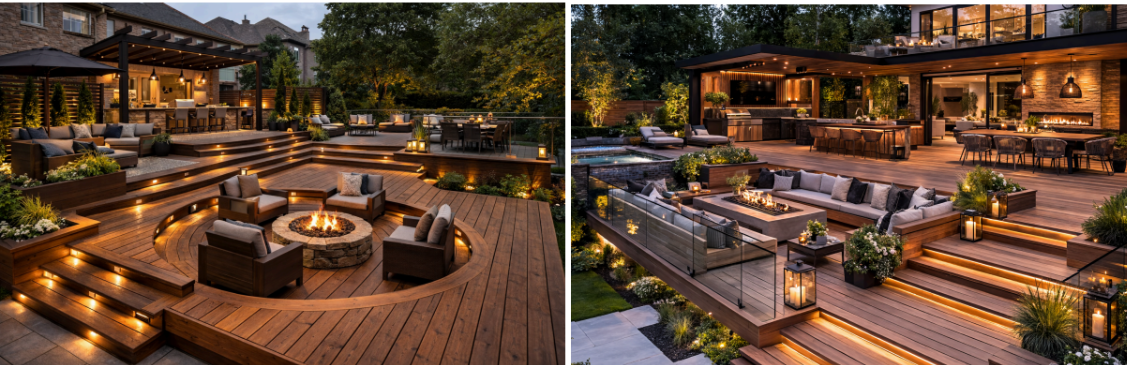
Composite decking often supports a more modern design direction. Its consistent colour and smooth finish pair well with features such as glass railings, built-in seating, and contemporary landscaping.
Safety and Comfort
As wood ages, it may develop splinters or rough areas. In shaded conditions, algae growth can also create slippery surfaces that require cleaning. Composite decking is typically smoother underfoot and designed to provide consistent traction, making it a comfortable option for families, pets, and entertaining.
Choosing the Right Deck Material
There is no single “best” decking material for every homeowner. The right choice depends on your design goals, maintenance preferences, and how you plan to use your outdoor space. Composite decking is often preferred for its durability and low maintenance, while wood decking continues to appeal to those who value natural materials and traditional backyard character.
With proper planning, either option can create a functional and enjoyable outdoor living space suited to Southern Ontario’s climate.
If you’re in Oakville or the surrounding Southern Ontario area and exploring outdoor decking options, Dutra Landscape helps homeowners design and build outdoor spaces that are functional, durable, and built for real life, not just photos.